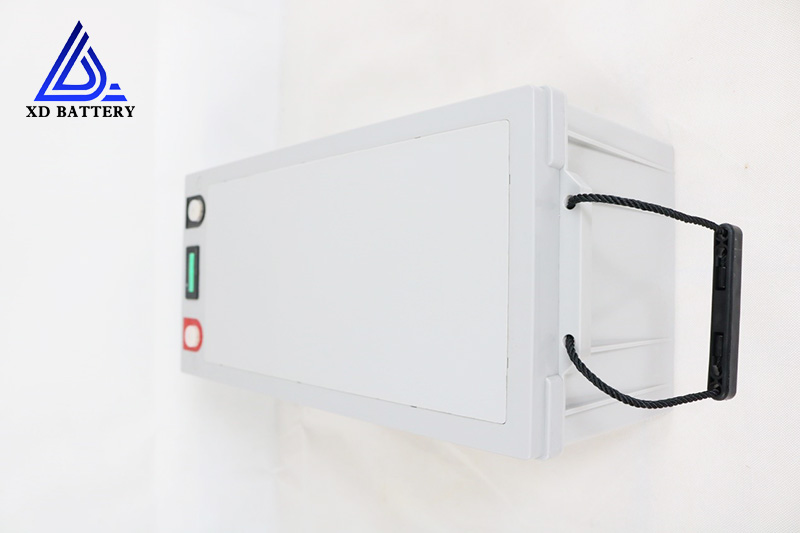
A gel battery immobilises its electrolyte in a silica gel, and that one change rewires the battery’s character. It cannot spill. It stratifies far less than a flooded cell. It tolerates deeper discharge and recovers better, and it shrugs off the high ambient temperatures that shorten AGM life — which is why gel became the default chemistry of solar storage in hot climates. XD Battery’s gel series is built for exactly that duty: solar deep-cycle service, maintenance-free, with a three-year warranty on the documented models.
The named models anchor the range. The 12V 100Ah solar gel battery (31 kg, 407 × 172 × 240 mm) is the volume solar block. The 12V 150Ah solar gel deep-cycle model starts at a one-piece MOQ. The sealed 12V 200Ah solar gel battery stretches the format to 522 × 234 × 223 mm for larger banks. Alongside them sits a combined deep-cycle Gel/AGM model (12V 100Ah, 29.5 kg) for buyers whose duty mixes standby and cycling.
Why solar chose gel
- Deep-discharge tolerance for daily cycling
- Heat tolerance for outdoor cabinets and hot climates
- No watering, no acid handling — remote-site friendly
- Low self-discharge for seasonal installations
Can a gel battery start an engine?
Gel is optimised for deep-cycle, not cranking. For starting duty, a dedicated starter battery is the right tool; for house loads on a boat or RV, gel is at home.
What charger settings does gel need?
Gel wants a slightly lower absorption voltage than flooded or AGM. A charger with a gel profile — or adjustable limits — protects the warranty life. Our solar gel guide covers settings.